
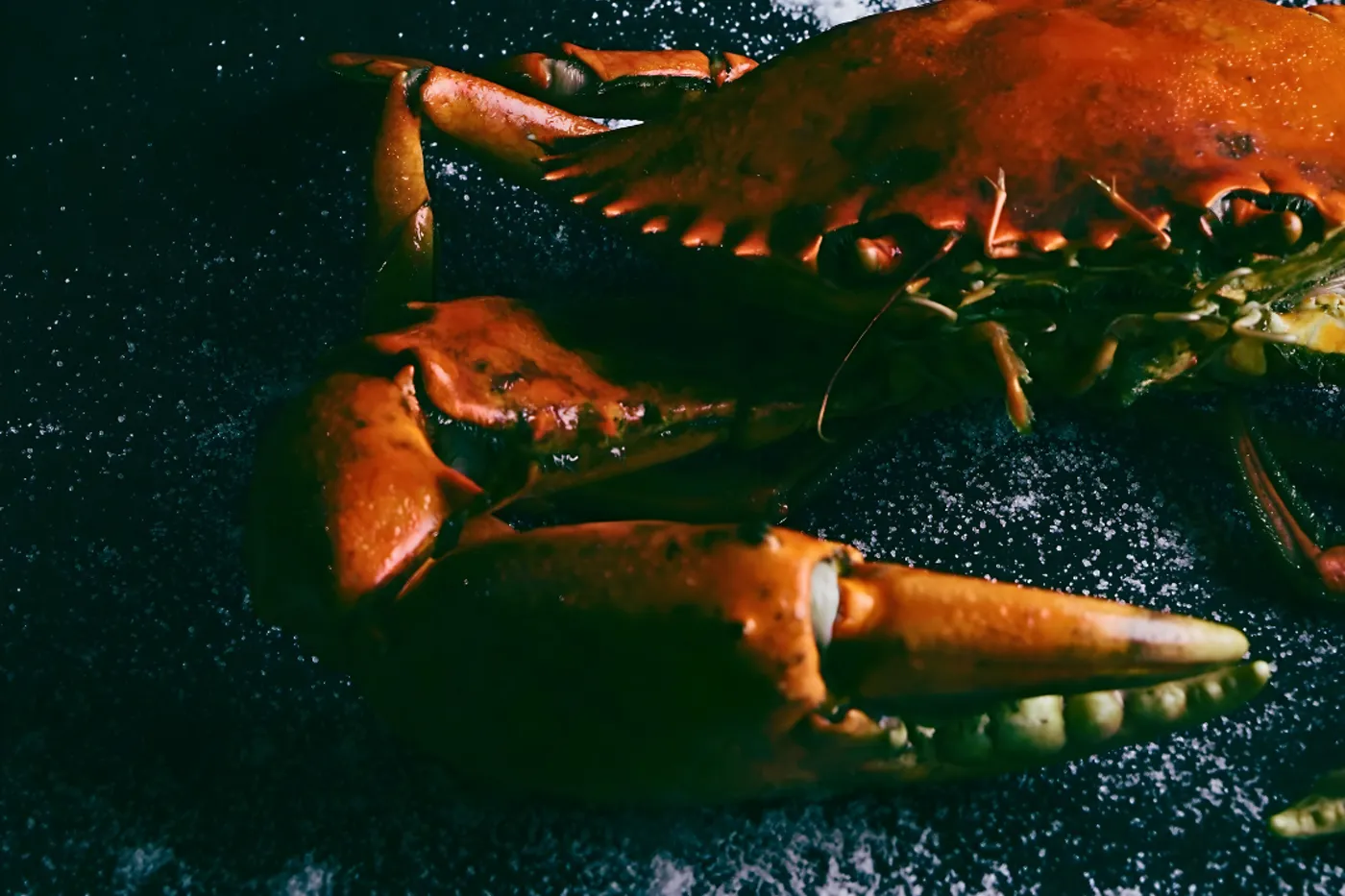
Every mud crab grows by leaving its shell behind. It swells, splits the old armour and walks out soft. For a while after that moult the new shell is roomy, and the crab inside it is light and thin on meat.
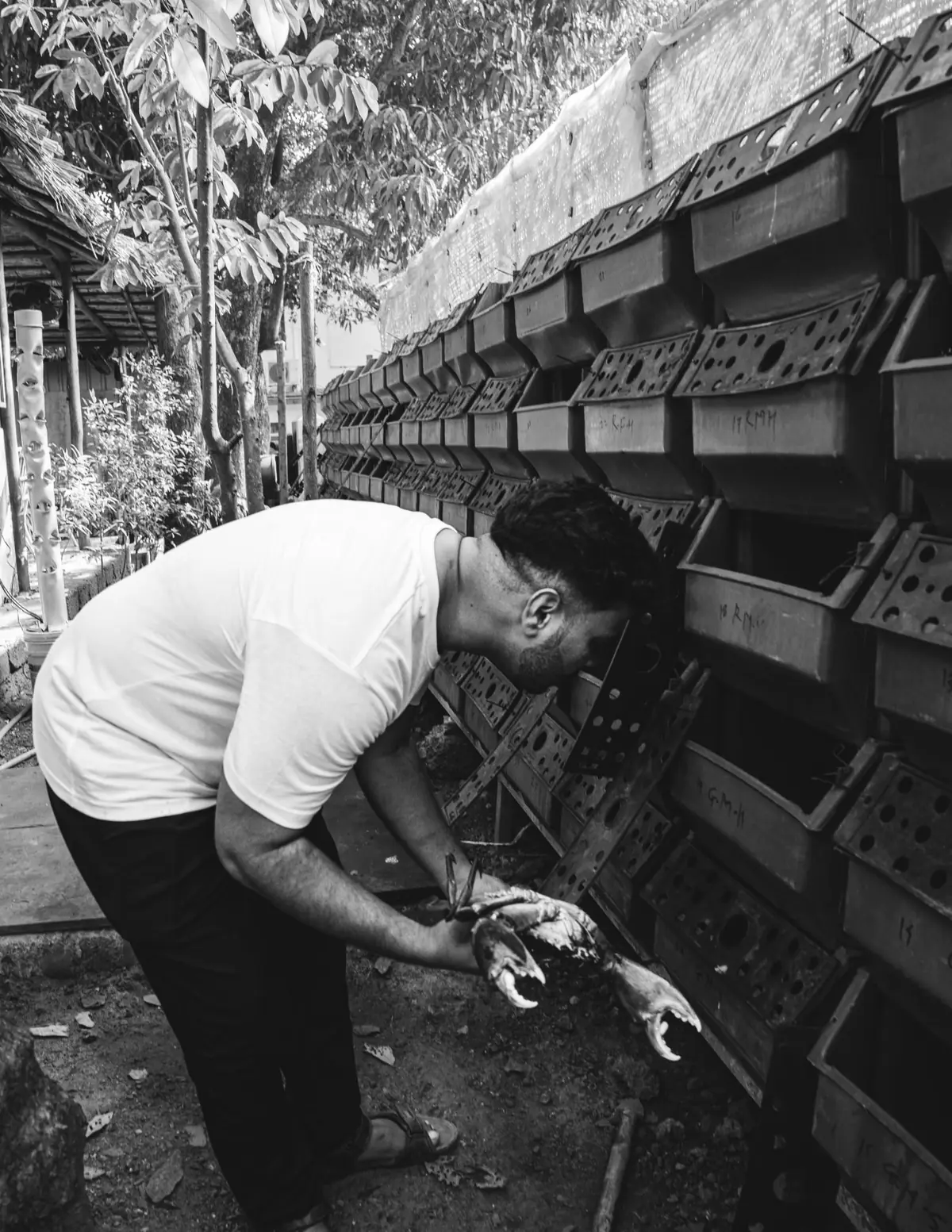
Fattening is the answer the coast arrived at long ago. Instead of rushing a light crab to the pot, it is kept, fed well and left to fill out its new shell.
What changes
A fattened crab has dense, sweet meat that comes away from the shell in whole pieces. The claws are packed tight, and the juices that run when it meets the fire are richer.
How you can tell
Weight is the first clue: a good crab feels heavier than it looks. Press the underside and it should feel firm, not hollow.
It is slower, and it asks more of everyone involved.
It is also why our crab is still in its boxes and not yet on the menu. Coming soon.